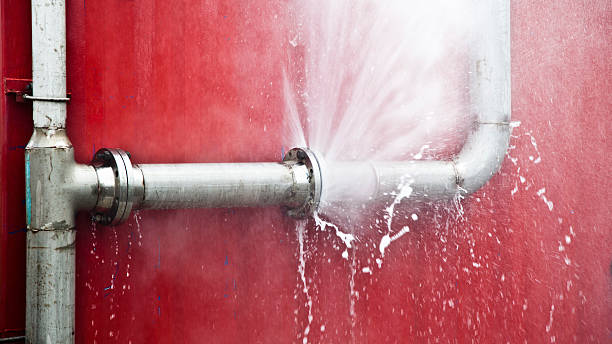
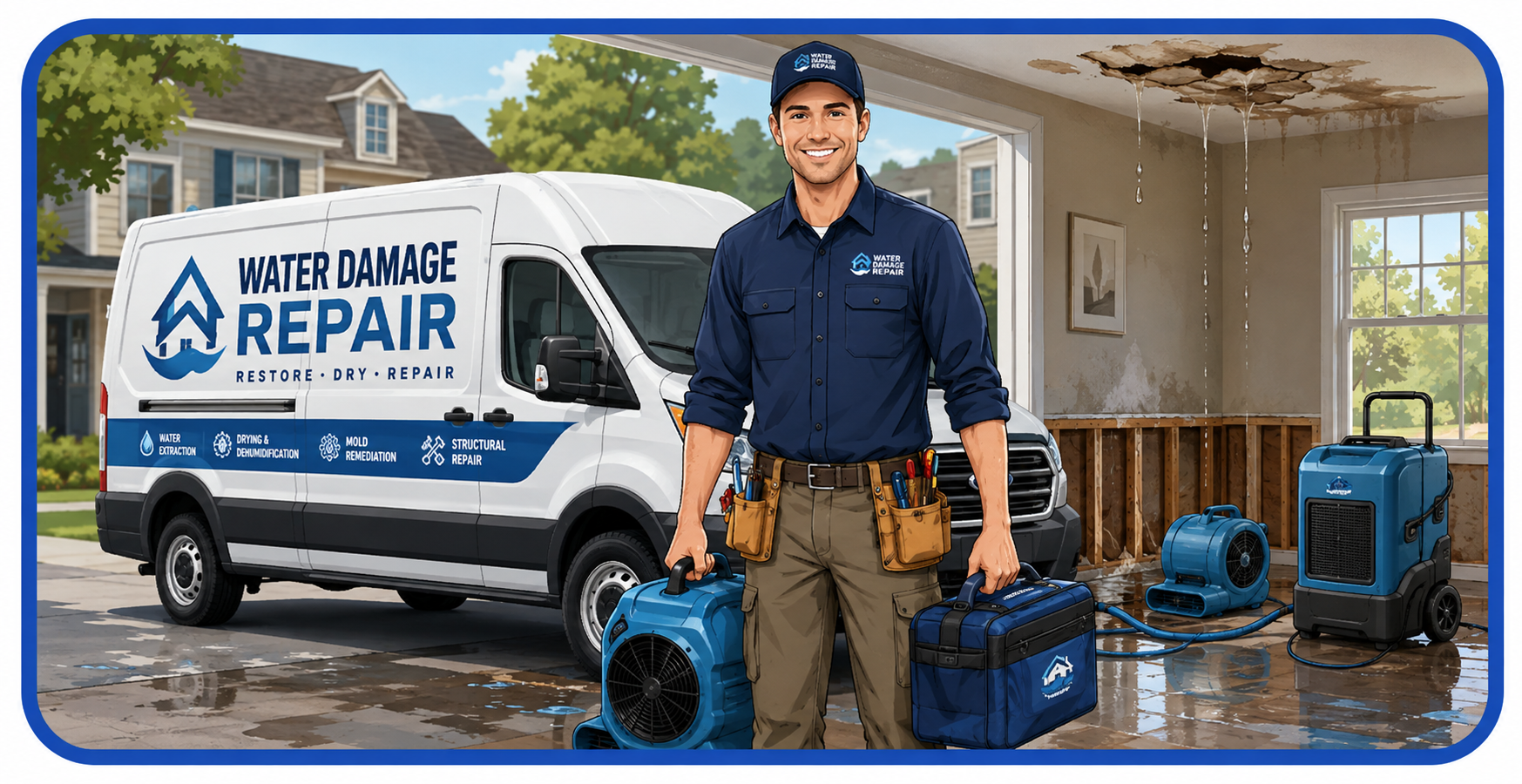
When water is coming through a ceiling or spreading across a floor, the first hour decides how much of the building you save. Call +1-323-329-3586 and get connected with a licensed, insured independent water damage contractor who can reach your property in Ascension Parish fast, day or night.


We are a free referral line. Business Leak Detection does not send out its own crews; every call is matched with an independent restoration contractor serving Ascension Parish who carries the license and insurance the work calls for. You explain the problem once, and the right specialist is connected with you.
The contractors in the network do this work every week: pulling standing water with truck-mounted extractors, setting air movers and dehumidifiers, reading moisture behind baseboards, and cutting out wet drywall before it becomes a mold job. They know a slab leak from a roof leak, and they price the job before they start.
Water damage rarely waits for business hours, so neither does the line. Nights, weekends, and holidays get the same response as a Tuesday morning, and if the first contractor is tied up, the call moves to the next one covering your part of the county.
Not every leak announces itself with a gush. Some of the worst damage starts quietly behind walls and under floors, and if you notice any of the following, it's worth calling today rather than next week.
These are the jobs that come through the line most. You don't need the right term; describe the problem and the call gets routed to someone who handles it.
The longer water stands, the deeper it wicks into walls and framing. Crews show up with truck-mount extractors, submersible pumps, and weighted extraction tools that squeeze water out of carpet and pad, so the drying phase starts hours sooner.
Before extraction, the contractor classifies the water as Category 1, 2, or 3 based on its source, because clean supply-line water and sewage backflow get handled very differently.
Homes take water from washing machine hoses, water heater failures, toilet supply lines, ice maker lines, and roof leaks. Residential contractors find the source, stop it, dry the structure, and then replace what can't be saved: drywall, baseboard, insulation, and flooring.
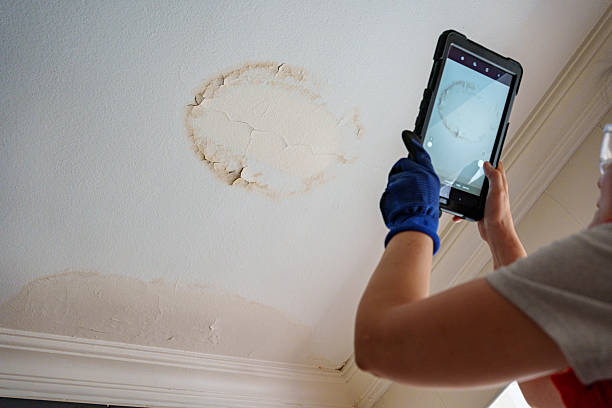
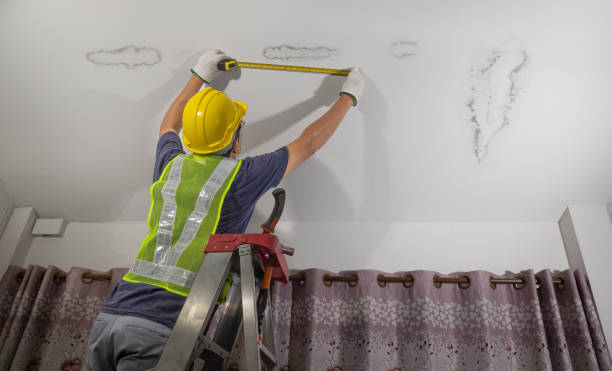
They'll photograph the damage, log readings room by room, and hand you paperwork your insurer can use if you decide to file.
Businesses lose revenue every hour the doors stay shut. Commercial contractors bring bigger equipment, including desiccant dehumidifiers and multiple extraction units, and they'll schedule around your operating hours when the space allows.
They're used to working with property managers, building engineers, and multiple tenants, and they section off affected areas with containment so the rest of the building keeps running.
Removing visible water is half the job. Contractors set air movers to push air across wet surfaces and refrigerant or desiccant dehumidifiers to pull moisture out of the air, then check progress daily with moisture meters until materials reach dry standard.
Thermal imaging cameras help find wet pockets behind walls without tearing everything out, and small weep holes drilled behind the baseboard can dry a wall cavity without full demolition.
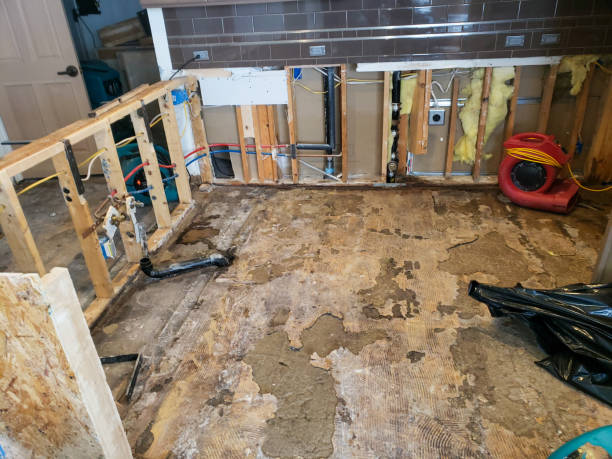
After drying, the contractor replaces whatever had to come out: ceiling panels, wall sections, insulation, trim, carpet pad, or hardwood. A lot of pros in the network do mitigation and rebuild both, which keeps one crew accountable start to finish.
Ask about texture and paint matching on ceilings and walls; a good repair shouldn't leave a visible patch.
Water from a sewer backup or rising floodwater is treated as contaminated. Crews suit up in protective gear, tear out porous materials that can't be cleaned, apply antimicrobial treatment, and dry the space under containment.
Keep everyone, especially children and pets, away from the affected area until it has been cleaned and disinfected by a pro.

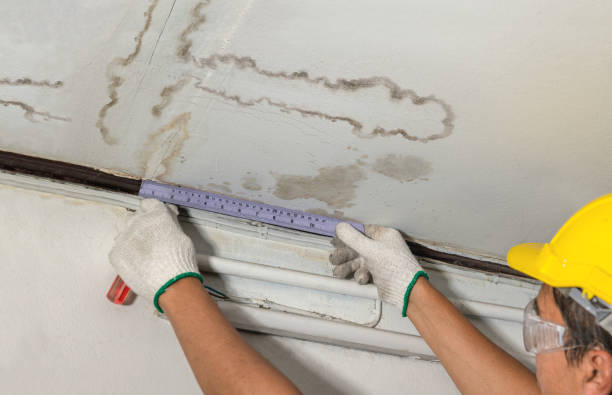
Four steps, usually in the order below. The first one takes about two minutes.
Call +1-323-329-3586. The dispatcher asks a few quick questions about the source, the rooms affected, and whether water is still running, then routes you to an available contractor.
Your call goes to an independent restoration contractor nearby who confirms an arrival time. Emergency calls get priority, and many crews reach the property in about an hour.
The contractor finds the source, measures moisture, classifies the water, and walks you through scope and price before starting.
The crew extracts water, sets drying equipment, and checks progress every day. Repairs come after the structure is confirmed dry, and the documentation stays with you.
There are plenty of names in a search result. These are the reasons people come back to this line when water shows up.

No vague estimates. The contractor explains scope and cost before any work begins, and changes get discussed with you first.
Emergency calls jump the queue. Arrival depends on traffic and weather, but crews commonly reach active leaks within roughly an hour.
You get matched with a contractor who serves your area regularly and knows the local housing stock, from slab homes to older basements.
The network is made up of independent contractors who carry the licensing and insurance the work calls for. Ask to see both when they arrive; a good contractor will show you without hesitation.
Contractors record photos, moisture readings, and equipment logs throughout the job, the same records insurance adjusters ask for.
If a contractor can't make it or isn't the right fit, call back and you'll be routed to another one. You should be matched with someone you're comfortable letting into your property.

Our water heater let go in the garage around midnight and ran into the laundry room. The contractor showed up in under an hour, had the water out by 2 a.m., and set fans and a dehumidifier. He showed me the moisture readings every day until it was dry.
A supply line under our upstairs sink failed while we were at work, and part of the kitchen ceiling came down. The contractor walked us through the quote before touching anything and took all the photos our insurer wanted.
I manage a small office building and a sprinkler head got knocked loose on a Saturday. They put up plastic containment, worked through the weekend, and we opened Monday with only one suite blocked off.
After a storm flooded our basement, the contractor explained why the floodwater counted as contaminated, removed the lower drywall and carpet, disinfected, and dried it out properly.
A slow leak behind the shower had been rotting the subfloor for months. They found it with a thermal camera without tearing up the whole bathroom, dried it, and replaced the damaged section.
Emergency calls get priority routing, and crews commonly reach the property in roughly an hour. You'll get an arrival window on the phone so you know when to expect them.
Business Leak Detection doesn't charge you anything for the referral. The independent contractor inspects the damage and gives you a quote before starting, so you know the expected cost up front.
Water extraction, emergency pumping, board-up and tarping after storms, structural drying, sewage cleanup, and leak source location are all handled around the clock.
We're a referral line, not a contractor. Every job is performed by an independent professional, and you deal with them directly on pricing and terms.
Sudden and accidental damage, like a burst pipe, is often covered, while gradual leaks and outside flooding may not be. Check your policy; contractors can provide documentation for your claim either way.
Typical drying runs about three to five days. Dense materials like hardwood and concrete slabs can need more time, which is why moisture readings, not the calendar, decide when it's done.
Shut off the water at the main valve, turn off power to wet areas if you can reach the breaker safely, move valuables and electronics out, and take photos for insurance.
Household fans move air at the surface but can't pull moisture out of wall cavities or subfloors. Without dehumidification and moisture readings, materials can look dry and still grow mold.
Under the right conditions, mold growth starts in one to two days. Getting materials dry quickly is the best prevention there is.
Yes. Many contractors in the network handle offices, retail spaces, restaurants, warehouses, and multi-unit buildings, including after-hours work and containment.
Yes. There's no charge to call or to be connected. You only pay the contractor for work you agree to.
Always. Contractors in the network are independent businesses, so ask for proof of licensing and insurance before work starts. A reputable pro will have it ready.
Calls come in from houses, condos, rental units, and businesses in Ascension Parish, and each one goes to an independent contractor who already works that area. Distance and availability decide who gets the call, so you aren't waiting on someone from across the county.
Water damage looks different depending on the building. Older homes with plaster walls and crawl spaces dry differently than newer slab construction, and contractors familiar with local building styles know what to check first.
From the county seat out to unincorporated areas, contractors serving Ascension Parish respond to homes, farms, and businesses alike. Rural properties on wells and septic systems get the same routing as in-town addresses.
Travel distances in a county are longer than inside one town, so the line routes each call to whichever contractor sits closest to the property, not just the biggest name in the county.

Every hour counts on a water loss. Call +1-323-329-3586 and get routed to a licensed, insured independent contractor serving Ascension Parish.
Reach a dispatcher this minuteCall +1-323-329-3586